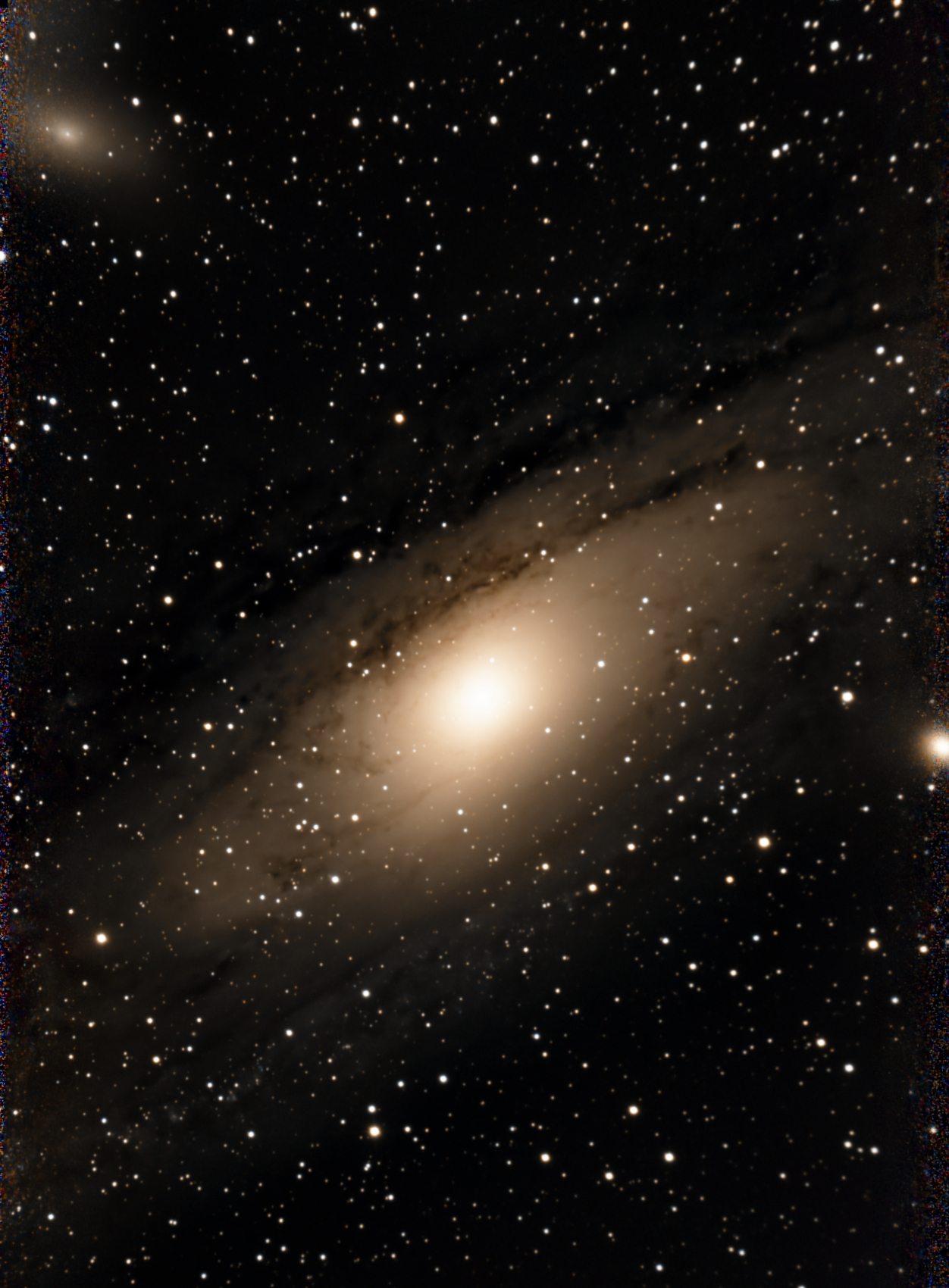
A friend came down to visit us recently, and somewhere in the conversation we found out we had something in common that neither of us saw coming: we both love stargazing. When the talk turned to dark skies, they were genuinely envious. They could not get over how many clear nights Southern California gets, and how many properly dark sites sit within a few hours of where we live.
That conversation is what gave me the idea for this post. Think of it as a guide for amateur astronomers and photographers: if you want dark skies in Southern California, here is where to go, and what each one costs you in drive time to get there.
I’ve written before about hauling a telescope out to Joshua Tree on new-moon weekends. What I never spelled out is the thing that actually decides where we go: the trade between how dark a place is and how long it takes to get there.
From our street in Orange County, the night sky is a write-off. On the Bortle scale, the nine-step ladder astronomers use to rank sky darkness, we sit at about a Bortle 8. That is “city sky.” You can read a newspaper by the glow. You can pick out the Big Dipper and maybe Orion, but the Milky Way is simply not there. Not faint. Gone.
To actually see the galaxy we live in, I have to drive. The question I’ve been answering by trial and error for two years is: drive where, and is it worth it? So I did what I usually do and turned it into a table.
First, the scale everyone quotes and nobody explains
The Bortle scale runs from 1 to 9. Lower is darker. Here is the plain-English version, because most articles throw the numbers around without telling you what they mean at the eyepiece.
- Bortle 1 to 2: The darkest skies left on Earth. The Milky Way is bright enough to cast a faint shadow. The zodiacal light is obvious. This is Death Valley at 3 AM.
- Bortle 3: Rural sky. The Milky Way still shows real structure. Faint galaxies and clusters come through a small telescope. This is a good Joshua Tree night.
- Bortle 4: The transition zone. The Milky Way is visible overhead but washed out near the horizon where the city glow sits.
- Bortle 5 to 6: Suburban sky. The Milky Way is faint or gone. You can still see planets, the Moon, and bright star clusters.
- Bortle 7 to 9: Town to inner city. Basically what I have at home. Planets and the Moon only.
The jump that matters most is from 8 down to 3. That is the difference between “there are some stars” and “oh, that is what the sky is supposed to look like.” Everything below is built around chasing that jump.
The ranking
I ranked the sites I can realistically reach from central Orange County by what I’ll call darkness-per-hour: how dark the sky gets set against how long I have to sit in the car to get there. Drive times are approximate and assume a clear run, not a Friday-evening crawl on the 91.
| Site | Bortle | Drive from OC | One-way miles | Best for |
|---|---|---|---|---|
| Caspers Wilderness Park | ~5-6 | ~45 min | ~35 | A quick look, planets, the Moon |
| Mount Pinos | ~3-4 | ~2.5 hrs | ~130 | Summer Milky Way, above the smog |
| Joshua Tree (Pinto Basin) | ~3 | ~3 hrs | ~150 | Deep-sky imaging, all-nighters |
| Julian | ~3-4 | ~2 hrs | ~90 | An easy dark-sky town with a bed |
| Anza-Borrego / Borrego Springs | ~2 | ~2.5 hrs | ~125 | The darkest sky within reach |
| Death Valley | ~1-2 | ~4.5-5 hrs | ~280 | A once-a-year pilgrimage |
A few of these deserve more than a row.
The local option that is honestly just okay
Caspers Wilderness Park, northeast of San Juan Capistrano in the Santa Ana foothills, is the closest thing Orange County has to a dark spot. Get up into the hills and away from the suburban glare and the sky does open up a little. But “a little” is the key phrase. You are still looking at a Bortle 5 or 6 at best, and most of these parks close their gates well before real astronomical darkness in summer. It is fine for showing a kid Saturn’s rings on a weeknight. It is not where you go to see the galaxy.
The one I keep meaning to observe from: Mount Pinos
Mount Pinos sits at 8,831 feet in the Los Padres National Forest, up past the top of the Grapevine. I’ve been up the mountain, but never for the night sky, and after two years of chasing darkness that is starting to feel like an oversight. It has been the worst-kept secret among Los Angeles astronomers for decades.
Here is what pulls at me: the elevation does most of the work. At nearly 9,000 feet you are above the marine layer and above the smog, and far enough from the San Fernando Valley’s light dome that the summer Milky Way genuinely pops. It is Bortle 3 to 4, not quite desert-dark, but the altitude buys steadier, clearer air than the desert floor on a lot of nights. From June through October, its darkness-per-hour might be the best on this whole list. This is the year I finally haul the telescope up.
The workhorse: Joshua Tree
I’ve covered my Joshua Tree nights in detail, so I’ll keep this short. It became an International Dark Sky Park in 2017. The western pull-offs near Yucca Valley are only okay because of the town glow, but drive deep into the Pinto Basin and you get a solid Bortle 3, a flat horizon in every direction, and near-zero traffic after midnight. For a full night of deep-sky imaging, it is still my default. The drive is the price of admission.
The darkest sky I can reach: Anza-Borrego
If the goal is pure darkness and nothing else, Anza-Borrego Desert State Park wins. It is a certified International Dark Sky Park, and the town at its heart, Borrego Springs, is one of only a handful of International Dark Sky Communities in the world. The valley is ringed by mountains that physically block the light domes of San Diego and the Coachella Valley, which is why it holds a Bortle 2. At Bortle 2 the Milky Way is bright enough to throw a faint shadow. And it is barely any farther than Joshua Tree. I’ve been to Anza-Borrego, but like Mount Pinos, never with the telescope after dark, which is exactly the kind of gap this whole exercise is meant to expose. If you want the darkest sky on this list without a five-hour drive, Borrego is it.
The pilgrimage worth making: Death Valley
Death Valley is a Bortle 1 to 2 and one of the darkest accessible places in the country, and it is the one site on this list where I can tell you first-hand that the rating undersells it. Stargazing there is phenomenal. The sky has a depth you do not get anywhere closer, the kind of night where the Milky Way stops being a band and turns into texture. It is also nearly five hours out, which takes it out of the “drive out after dinner” category entirely. This is a plan-a-weekend, book-a-room trip, not a spontaneous one. But at least once a year, it is worth every mile.
An honorable mention with a bed: Julian
Julian became an International Dark Sky Community in 2021. Its amber streetlights and lighting ordinances hold the town to a Bortle 3 to 4. It is not the darkest option, but it is the most civilized: you can sleep in an actual bed, get pie in the morning, and still see the Milky Way core on a moonless summer night. For a trip with family who are not as obsessed with the eyepiece as I am, that trade is worth a lot.
So what actually wins
If I plot darkness against drive time, a few clear answers fall out depending on the night.
Best sky I’ve ever stood under, and worth the five hours once a year: Death Valley. Best darkness within an easy reach, and the one I still need to observe from: Anza-Borrego. Best darkness-per-hour in Milky Way season, also still on my list: Mount Pinos. Best all-nighter for imaging with a flat horizon and no traffic, and my proven default: Joshua Tree’s Pinto Basin. Everything closer is a compromise.
The honest takeaway after two years of this is that the darkness-per-hour sweet spot for Orange County sits right around the 2.5-hour mark. That is the radius where the sky drops to Bortle 2 or 3 and the galaxy comes back. Anything less and the city is still in the frame. Anything more and you had better be staying the night.
A few planning notes, regardless of where you go
The site is only half of it. The other half is timing, and no amount of driving fixes a bad night.
- Chase the new moon, not the weekend. A half-lit moon washes out everything except planets and the brightest clusters. The two or three darkest nights of the month are the only ones worth hauling a telescope for. Pick the site around the Moon, not the other way round.
- Milky Way season is roughly February to October. The bright galactic core rides highest in the southern sky in the summer pre-dawn hours. In winter you get a different, dimmer sky.
- Check a light pollution map before you commit. A quick look at a tool like lightpollutionmap.info will tell you the Bortle zone of any pull-off you are considering, so you are not guessing.
- Elevation beats distance more often than you’d think. Mount Pinos is proof. Getting above the marine layer can matter more than the raw Bortle number on the map.
- Have a cloud Plan B. I’ve driven three hours out to a dark-sky night and watched a cloud deck swallow the whole thing. It happens. A warm car and low expectations are part of the kit.
Next new moon, I’ll probably still point the car at Joshua Tree out of habit. But this table is a quiet argument that I should be splitting more of those nights between Borrego and Mount Pinos. Two years in, I’m still learning my own backyard, which in Southern California happens to be about 150 miles wide.
Quick answers
Where can I see the Milky Way near Orange County?
The nearest truly dark sky is Anza-Borrego Desert State Park, about two and a half hours out and a Bortle 2. Joshua Tree’s Pinto Basin and Mount Pinos are similar drives and nearly as dark. Anything closer than roughly two hours still carries too much city glow to show the galactic core.
What is the closest dark-sky spot to Orange County?
Caspers Wilderness Park, about 45 minutes away in the Santa Ana foothills. It is only a Bortle 5 to 6, so it works for the Moon, planets, and bright clusters, but not the Milky Way. For real darkness you need to drive about two and a half hours.
What Bortle rating do you need to see the Milky Way?
Bortle 4 is the rough cutoff for spotting the core overhead, and Bortle 3 or darker is where it really shows structure. From a Bortle 8 city sky, which covers most of Orange County, the Milky Way is invisible.
When is Milky Way season in Southern California?
Roughly February through October, when the bright galactic core sits above the horizon. It rides highest in the pre-dawn hours of summer.
Bortle ratings above are typical values from published dark-sky sources and my own nights out; any given site varies with weather, season, and exactly where you park. Drive times are rough, from central Orange County, and assume traffic is on your side, which it rarely is.