
We’ve made stargazing trips a bit of a habit over the last two years, and if you asked me to pick a favorite, it’s Joshua Tree, every single time.
The math is simple. From our place, I can be inside a Bortle 3 dark-sky zone in about three hours of driving. No hotels, no elaborate planning, no fighting crowds. Drive in by evening, stay up with the stars, come back in the morning. For a family with a curious kid and a dad with a telescope, that’s just about the perfect setup.
On the new-moon Saturday of April 18, 2026, we structured the night around something new: a New Moon Night Sky Program with Sky’s The Limit Observatory & Nature Center, right at the north entrance of the park in Twentynine Palms.
A quick note on the cover photo: that’s my own Milky Way shot over Joshua Tree, but it’s from a clear-sky trip a year earlier. The Milky Way on this particular night, as you’ll see further down, had other plans.
About Sky’s The Limit Observatory & Nature Center
Sky’s The Limit is a 15-acre nonprofit campus sitting just outside the north entrance of Joshua Tree. The site includes a proper observatory dome, a scale-model Solar System Orrery (20 billion to 1), a solar calendar sundial that marks the solstices and equinoxes, a meditation garden, and a short nature trail with native desert plants. They also serve as a satellite campus for Copper Mountain College’s astronomy program, which is how they bring in presenters who actually know what they’re talking about.
Their signature offering is the New Moon Night Sky Program, held on the Saturdays nearest the new moon, which are the darkest nights of the month. Some months have two such Saturdays. Programs begin about half an hour after sunset and run roughly two hours, followed by open telescope viewing with volunteers.
Want to go? Check dates and reserve a spot on their Upcoming Programs page at skysthelimit29.org. A non-refundable $25-per-vehicle donation holds your reservation, and spots fill up fast on new-moon weekends.
The Program: “The Day the Sun Dies”
Our presenter for the evening was Sophia, the Scientists In Parks Astronomy Intern at Joshua Tree National Park, and she was excellent. Her talk was titled The Day the Sun Dies, with the broader theme being the life and death of stars in general. She walked us through stellar evolution with analogies a seven-year-old could follow, all the way to what would happen the day our own sun runs out, and then zoomed out into the Greek myths about the origins of the sun and the stars. Space science, mythology, and a little bit of doomsday storytelling, and surprisingly, it all worked.
After the talk, she moved us outside for a constellation tour, laser pointer up at the sky, tracing the major patterns and the stories behind them. Our daughter was locked in. This is the kind of kid who usually gets fidgety thirty minutes into anything, and she sat through the entire thing wide-eyed.
Once the formal session ended, the real treat began. Volunteers had rolled out telescopes all across the grounds and were happy to let anyone look through them. The headliner was inside the observatory dome itself, the 14-inch Celestron Schmidt-Cassegrain on a CGE Pro computerized mount. They pointed it at Jupiter, and there it was: the disk, the cloud bands, and all four Galilean moons lined up like a little string of pearls. My daughter walked away from that eyepiece with a grin I’ll remember for a while.
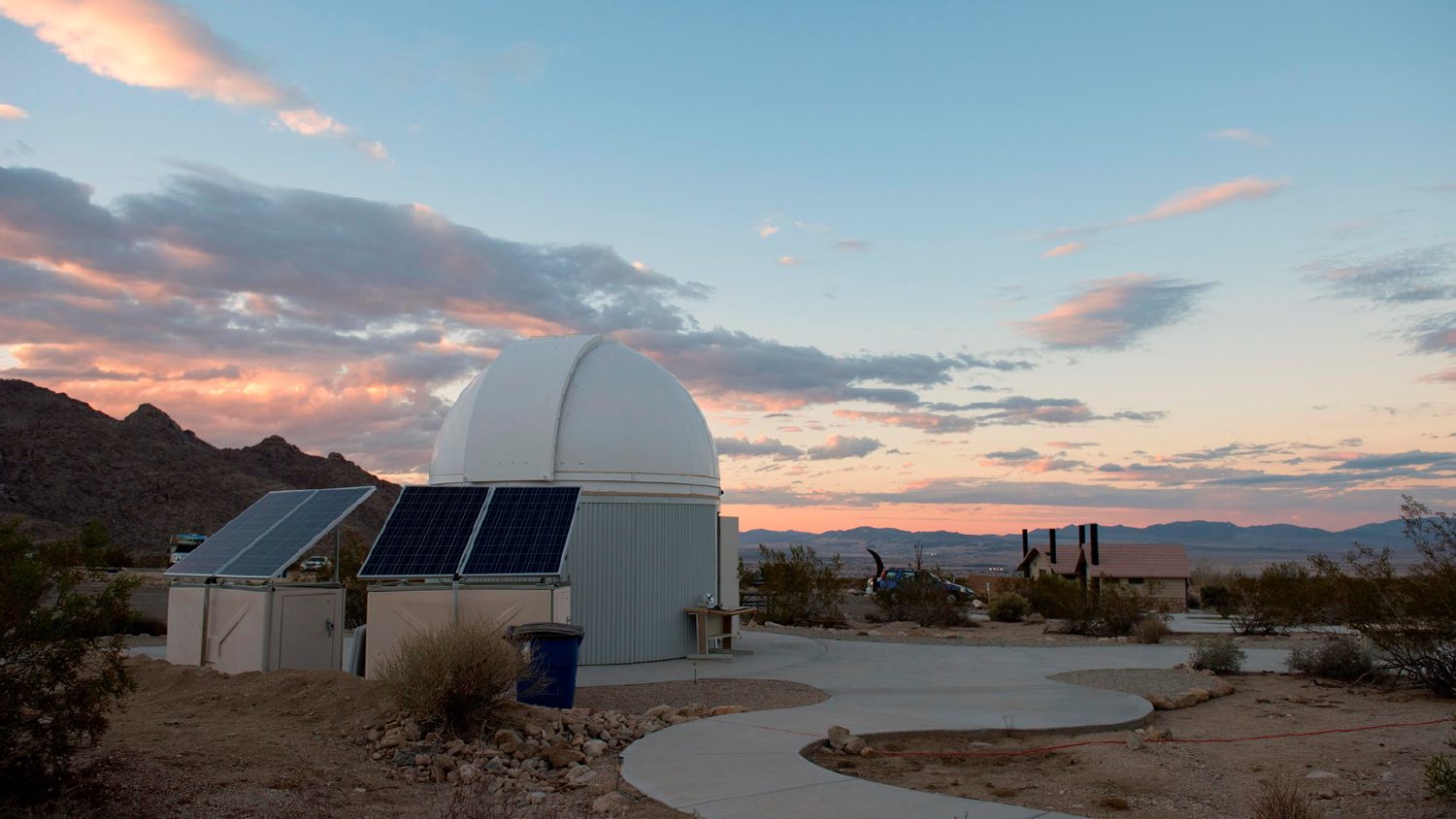
The skies were clear, which is non-negotiable for this kind of night. That part, at least, the weather got right.
Into the Park: Why I Always Drive to Pinto Basin
Once the program wrapped, we pointed the car south and drove into Joshua Tree proper to set up for our own session.
There are popular pull-offs near the western end of the park, like Cap Rock, Hidden Valley, and the Keys View area, and on most nights they’re perfectly good. But they’re also closer to the lights of Yucca Valley and Palm Springs, and they get a steady trickle of cars with headlights sweeping across the desert all night. Not ideal for a telescope.
My preferred spot is deeper in: the Pinto Basin, the stretch of road between the Cholla Cactus Garden and Cottonwood Visitor Center. The sky here is about as dark as it gets in Southern California, traffic drops to near zero after midnight, and the basin is wide and flat, so you can see the horizon in every direction. We’ve been there a handful of times now, and for astrophotography it’s just a different league.
Then the Clouds Rolled In
I had just finished polar-aligning when the sky decided to turn against me. Bilemy, a thick, uncooperative cloud cover slid in from the west and swallowed the stars. The telescope, bless it, was trying its best to lock onto targets, but all it could see was cloud.
We were in for the night anyway. My wife and daughter climbed into the back of the car, stretched out on the air mattress we’d set up, and went to sleep. I settled into the front seat with a lot of hope.
Around 1:30 AM, my daughter, half-asleep and poking her head out the window, said, “Daddy, I can see stars.” I looked up. She was right. The cloud deck was breaking apart. Game on.
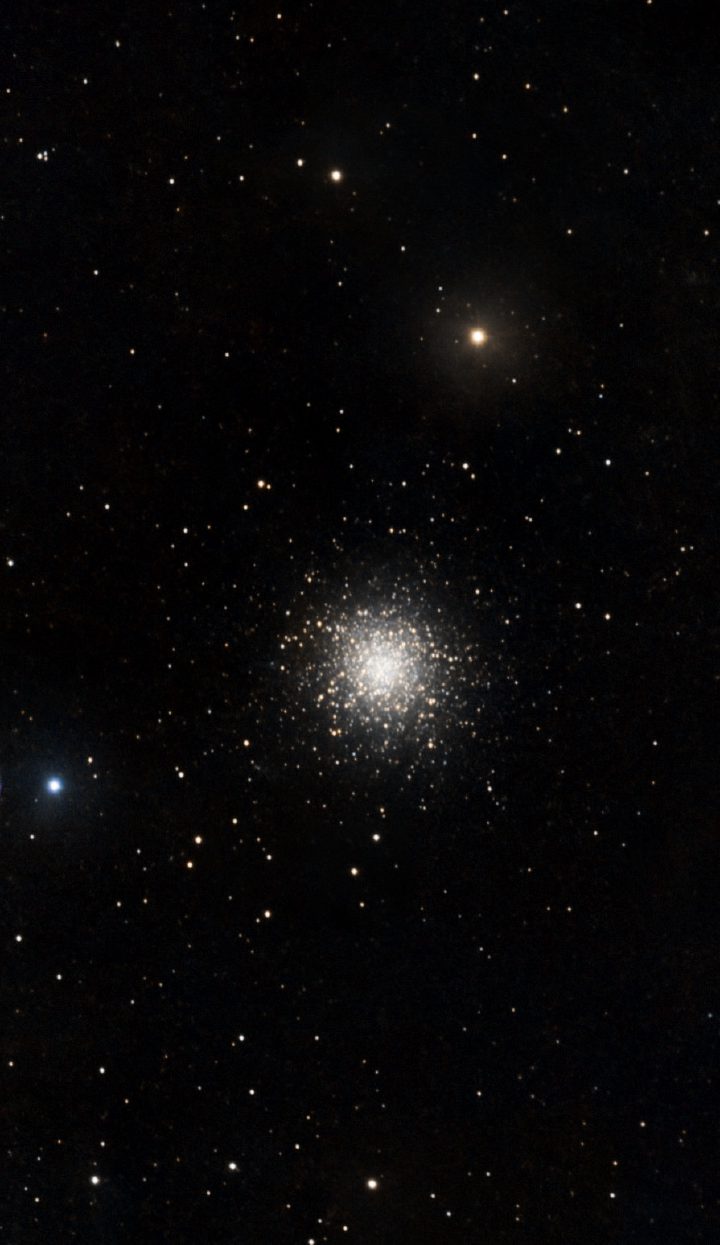
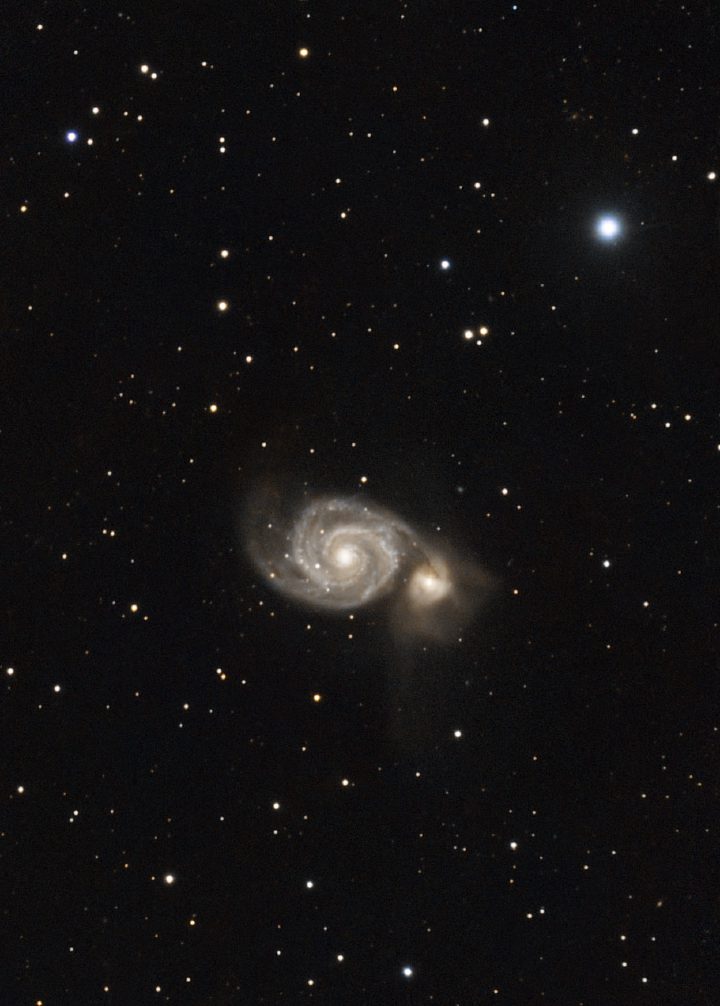
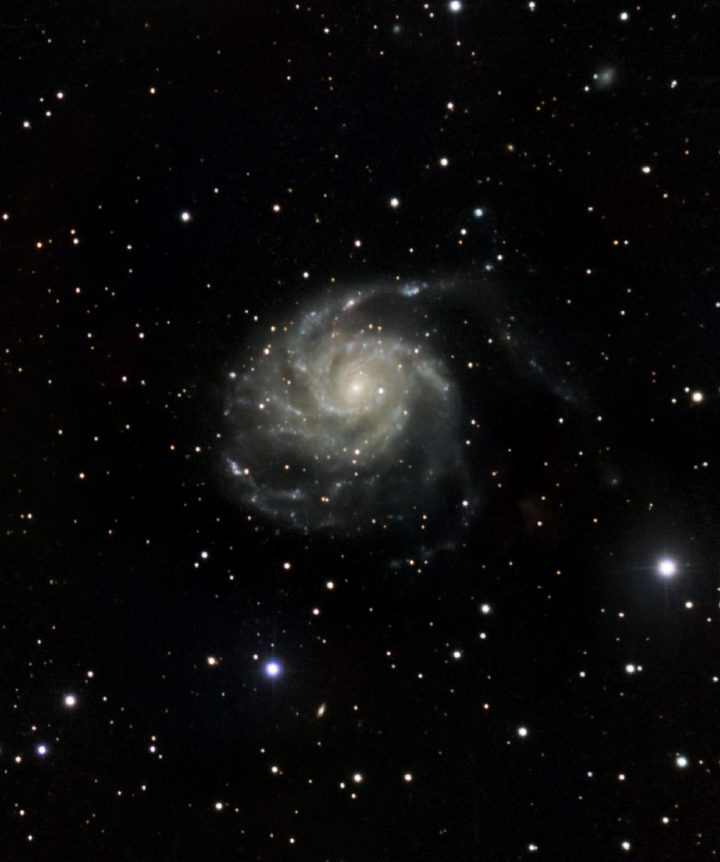
The DSOs: M13, M51, M101
Once the sky cleared, I re-aligned the mount and went to work. Over the next few hours I captured three deep-sky objects I’d been hoping to shoot all winter.
Processing Workflow
Nothing fancy, but here’s how each image came together:
- Capture: Individual light frames through the telescope, plus calibration frames.
- Stack: Frames cleaned, aligned, sequenced and stacked in Siril.
- Denoise: Background noise reduction in GraXpert.
- Color & finish: Final levels and color correction in GIMP.
A 70-minute total on M101 is still on the shorter end for that target, but the cloud-break window didn’t give me much more. I’ll happily take what we got.
The Milky Way That Almost Was
Around 2:30 AM, while the telescope was busy tracking through its own imaging run, I set up my Canon DSLR on a tripod with a wide-angle manual lens and swung it toward the Milky Way core rising in the southeast.
The clouds, predictably, wanted another word.
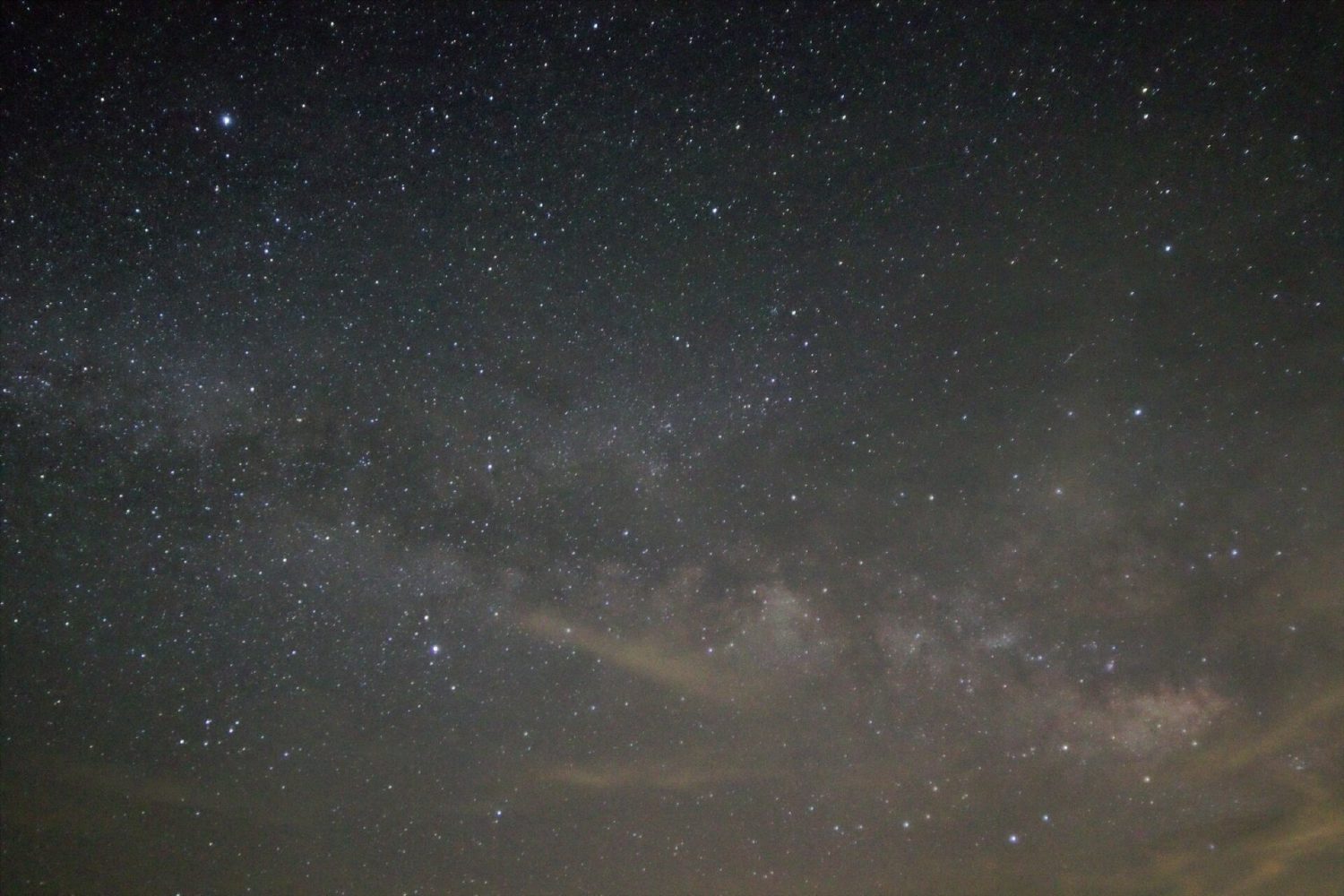
Not the shot I was hoping for, but there’s something honest about a photo that shows you exactly what the night was like.
A Comet That Didn’t Cooperate
As sunrise approached, I had one more thing on the list: Comet C/2025 R3, which was supposed to be riding low in the eastern sky just before dawn. I’d been quietly hoping for a miracle clearing on the horizon.
Miracles, as it turns out, don’t happen on schedule.
What we got instead was a bank of low clouds that lit up gold as the sun climbed behind them. Sun rays fanned through the gaps, the desert turned warm and pink, and there was absolutely zero chance of picking up a comet through any of it. I put the telescope away and just watched.
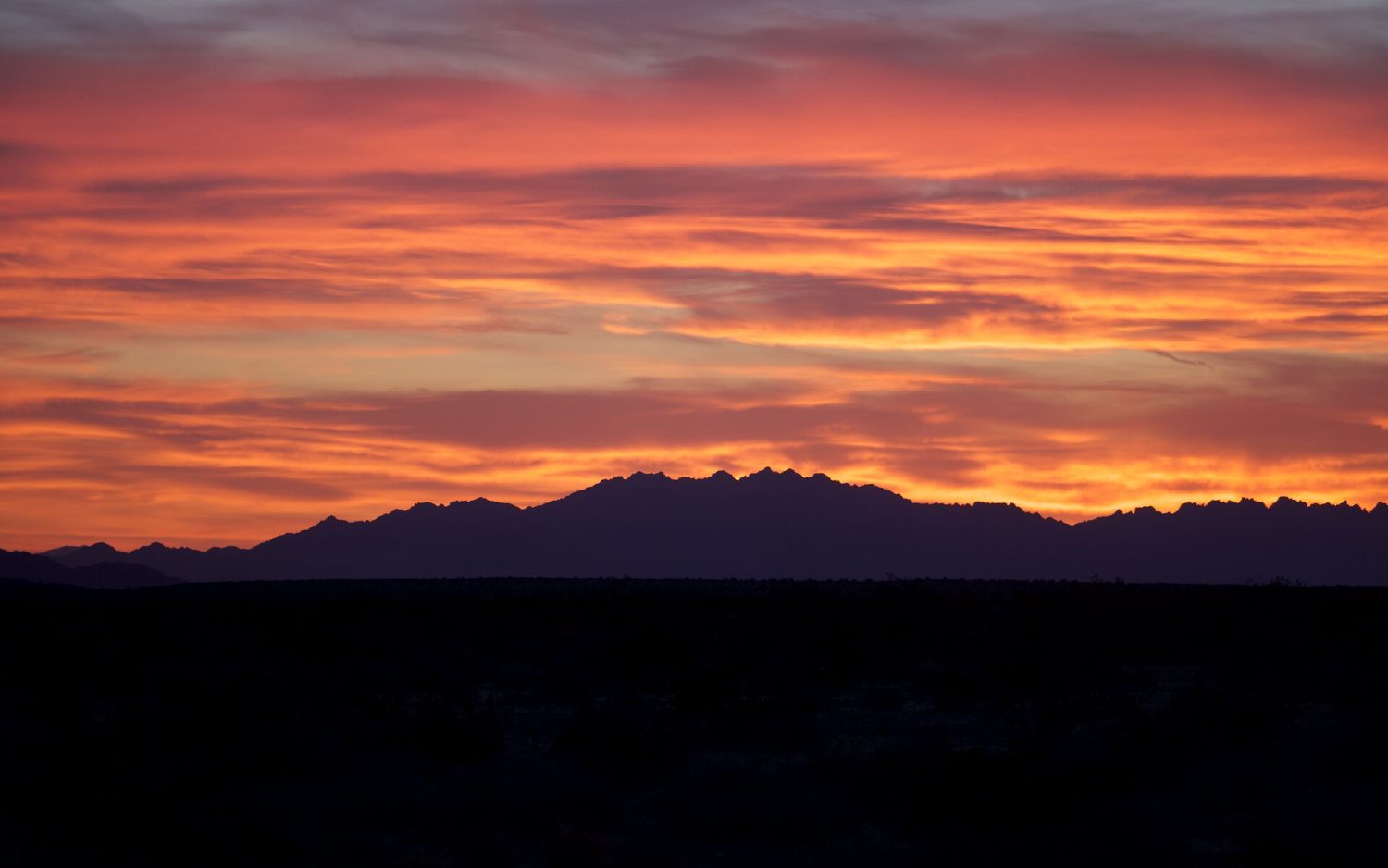
We made sandwiches out of the cooler, ate breakfast on the hood of the car as a family, and called it a trip.
A Few Notes If You’re Planning Your Own Night
A handful of things that make these Joshua Tree nights work:
- Go on a new moon weekend. Even a half-lit moon will wash out everything except planets and the brightest star clusters. The darkest two or three nights of the month are the only ones worth hauling a telescope for.
- Book Sky’s The Limit early. New-moon Saturdays fill up. You want the $25-per-vehicle reservation confirmed before you drive out.
- Drive past the popular pull-offs. Pinto Basin is noticeably darker than anywhere in the western part of the park and has far less traffic after midnight.
- Bring layers. Serious layers. The desert drops into the 40s even in late spring, and you’ll be standing still for hours.
- Fuel up before the park. There are no gas stations inside. The nearest reliable fill-up is in Twentynine Palms on the north side or Indio on the south.
- Have a cloud-cover Plan B. The forecast was “clear all night.” The sky had other ideas. A warm car, snacks, and patience are part of the kit.
Joshua Tree doesn’t always give you what you came for. But between the Sky’s The Limit program, three galaxies and a globular cluster in the can, and a sunrise I didn’t plan on, this one delivered plenty. We’ll be back on the next new moon.
Gear note for anyone curious: deep-sky imaging was done on my main telescope rig; the Milky Way shot was a Canon DSLR with a manual wide-angle lens on a static tripod. No star tracker on the camera, which is part of why the clouds won that round.